
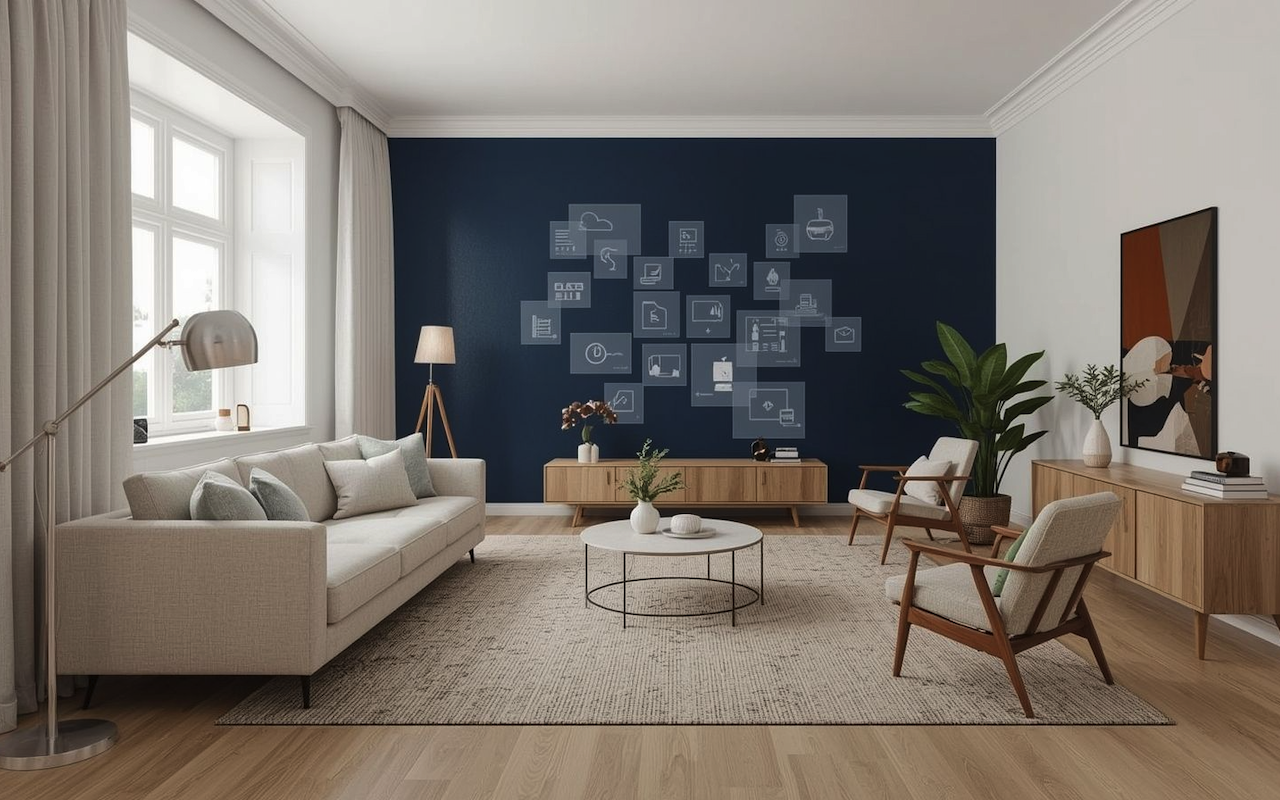
Artificial intelligence is changing the interior design industry, simplifying the complicated process of space planning into one that is intuitive and accessible. Industry predictions estimate that the AI design market will skyrocket from $20 billion in 2025 upwards to $60.6 billion by 2030, with a remarkable CAGR of 24.9%.
The development of AI interior design tools have advanced to the point that both professionals and homeowners can visualize their ideas in seconds, explore different styles without any financial exposure, and produce photorealistic results. From virtual staging to smart furniture placements, these technologies are becoming essential partners in achieving the best spaces.
Why AI Tools Became Essential in 2025
According to the American Society of Interior Designers, approximately 72% of designers already actively use AI in their work. The key advantages include:
- Time Efficiency: 45% reduction in initial design phase
- Cost Reduction: Minimizing the need for physical samples and trial-and-error methods
- Design Democratization: Making professional-quality design accessible to everyone
- Enhanced Creativity: AI suggests combinations humans might not consider
- Real-time Collaboration: Instant visualization for client presentations
Top 10 AI Interior Design Tools for 2025
1. Paintit AI: The Shopping-Integrated Design Solution
Best for: Furniture recommendations and shoppable designs
Paintit AI is a design tool that generates photorealistic room visualizations and includes furniture shopping recommendations. The platform connects design visualization with real-world implementation. In contrast to tools that focus solely on image generation, Paintit AI generates design concepts that are linked to specific products. It includes shopping integration and aims to combine visual design with practical product suggestions.
Key Features:
- Smart furniture placement considering scale, layout, and functionality
- Real-time design generation in under 60 seconds
- Shopping integration with cost calculations
- Project organization through "Boards" for collaboration
- Design widget for websites (perfect for real estate and furniture brands)
Pricing: Weekly plan $6.99 (20 renders), Monthly plan $24.99 (100 renders)
2. Spacely AI: The Most Advanced Platform
Best for: Professional designers and advanced customization
Spacely AI offers the most sophisticated AI interior design experience with exceptional fine-tuning capabilities. Users can adjust each piece of furniture and re-render images in specific ways, providing unprecedented control over the output.
Key Features:
- Highest quality renders in the market
- Custom prompt generation and reference photo uploads
- Advanced furniture adjustment tools
- Style mixing capabilities
- Professional-grade outputs
Pricing: Starting at $25/month with 3-day free trial
3. Planner5D: The All-in-One Solution
Best for: Space planning and comprehensive design
Planner5D excels in space planning capabilities, offering both web and mobile platforms. It's particularly strong in creating to-scale floor plans and converting hand-drawn layouts into digital designs.
Key Features:
- 2D and 3D floor plan creation
- AI room design generation
- Augmented reality visualization
- Cross-platform compatibility
- Extensive furniture library
Pricing: Free version available, Pro plans start at $9.99/month
4. HomeVisualizer AI: The Realistic Renderer
Best for: High-quality visual outputs
HomeVisualizer AI focuses on creating breathtaking, realistic renders that interior designers use for client presentations. The platform is crafted by expert interior designers to ensure professional-quality results.
Key Features:
- Expert-designed templates
- High-resolution outputs
- Multiple style options
- Quick rendering times
- Professional presentation tools
Pricing: Plans start at $19/month
5. RoomDeco: The Creative Powerhouse
Best for: Unique styles and creative themes
RoomDeco offers the most diverse range of styles and themes, including seasonal options like "Christmas," "Birthday," and creative themes like "Vampire's Lair" and "Steampunk Workshop."
Key Features:
- Dozens of unique styles
- Seasonal and themed designs
- Color and material customization
- Super-fast rendering (10 seconds average)
- Creative party and commercial applications
Pricing: Starting at $15/month with additional theme packs available
6. Gepetto: The User-Friendly Option
Best for: Beginners and ease of use
Gepetto provides an extremely intuitive interface with over 30 different room styles. Its simplicity doesn't compromise functionality, offering creativity level adjustments and style blending capabilities.
Key Features:
- 30+ room styles
- Adjustable AI creativity levels
- Style blending functionality
- Simple, clean interface
- Google Lens shopping integration
Pricing: €40/month (~$43 USD) with 7 free renders
7. Visualize AI: The Professional's Choice
Best for: Architects and professional designers
Visualize AI caters to professionals with features for architectural designs, interior designs, and product creation. It accepts sketches, plans, and elevation details as input.
Key Features:
- Architectural and interior design capabilities
- Sketch-to-render functionality
- Product design features
- Comprehensive history tracking
- Professional-grade outputs
Pricing: Starting at $19/month for 400 credits
8. Homestyler: The Comprehensive Platform
Best for: Complete design workflow
Homestyler isn't just an AI tool but a complete interior design platform offering floor plans, virtual tours, and 3D designs alongside AI-generated rooms.
Key Features:
- AI Designer functionality
- Floor plan creation
- Virtual tour generation
- 3D space design
- Professional workflow integration
Pricing: Starting at $5/month for watermark-free renders
9. DecorMatters: The Community-Driven Game
Best for: Design inspiration and community interaction
DecorMatters gamifies interior design, creating a community platform where users participate in design challenges and earn coins to unlock new furniture and features.
Key Features:
- Augmented reality visualization
- Community design challenges
- Real furniture catalog integration
- Gamified experience
- Social design events
Pricing: $20/month for unlimited furniture access
10. REImagine Home: The Indoor-Outdoor Specialist
Best for: Comprehensive home design including outdoor spaces
REImagine Home uniquely handles both interior and exterior spaces, making it perfect for complete home transformations including backyards, pools, and decks.
Key Features:
- Indoor and outdoor design capabilities
- "Surprise me" mode for quick ideas
- Advanced masking tools
- Pay-per-download model
- Comprehensive home coverage
Pricing: Credit packages starting at $19 for 10 downloads
Feature Comparison Table
| Tool | Best For | Starting Price | Key Strength | Rendering Speed |
|---|---|---|---|---|
| Paintit AI | Shopping integration | $6.99/week | Furniture recommendations | 60 seconds |
| Spacely AI | Advanced customization | $25/month | Fine-tuning controls | Variable |
| Planner5D | Space planning | $9.99/month | Floor plan creation | Fast |
| HomeVisualizer | Visual quality | $19/month | Realistic renders | Medium |
| RoomDeco | Creative styles | $15/month | Unique themes | 10 seconds |
| Gepetto | Ease of use | €40/month | Simple interface | Fast |
| Visualize AI | Professional use | $19/month | Architectural features | Slow |
| Homestyler | Complete workflow | $5/month | All-in-one platform | Medium |
| DecorMatters | Community | $20/month | Gamified experience | Variable |
| REImagine Home | Indoor-outdoor | $19/10 downloads | Outdoor capabilities | Fast |
The Future of AI Interior Design
The interior design field is experiencing a unique moment in time, as we are not only seeing artificial intelligence change how we work but allowing us to completely reimagine how we can create home and living. Imagine being able to tell your AI design assistant, "I want my living room to be energizing in the morning for my workout, then cozy when I watch movies in the evening," and then seeing those options, displayed in real-time form based on the time of day.
The emergence of sustainable design is amazing to think about. AI systems of the future will not only show you beautiful furniture, but will recommend furniture designed with recycled materials, assess carbon footprints, and evaluate how long your pieces will last based on your lifestyle and why. It will be just like having an interior designer with a green thumb who focuses on the welfare of the planet, and never forgets it. Whereas right now, in sustainability thinking, we are only trying to slow down the consumption of natural resources.
Perhaps the most fascinating opportunity is that AI is also discovering the emotional psychology of space. Complex algorithms are being developed to understand the differing elements that need to comprise a room for someone who is experiencing stress, versus someone who is a creative entrepreneur. In the future, AI will be able to assess your routines, energy levels, and mental health requirements, and differentiate them to actively create spaces that promote your well-being.
The introduction of voice technology into design practice allows for more natural design conversations. Instead of clicking through a series of menus, you'll just talk about what you feel about a space, and it'll be transformed in real-time. Saying “Make it less cluttered but keep it warm” becomes a simple command that rearranges furniture, adjusts lighting, and transforms the space while preserving its inviting feel.
The democratization of good design keeps getting faster as we have AI tools that are cheaper and easier to use than previous iterations. Professional-quality interior design, once accessible only to high-end clients, is now available to anyone with a smartphone. This shift improves not just individual living spaces but also contributes to the aesthetic quality of entire communities.
As we approach 2025, AI interior design tools are evolving from simple assistants into design partners, helping us envision not only what looks good but also what feels right for each individual and their way of living.
Conclusion
The AI interior design industry has developed significantly, introducing tools that are changing how spaces are created. Whether you are a designer aiming to work more efficiently, a homeowner preparing for a renovation, or a real estate agent staging a property, there are AI tools available to assist.
Share this post
Leave a comment
All comments are moderated. Spammy and bot submitted comments are deleted. Please submit the comments that are helpful to others, and we'll approve your comments. A comment that includes outbound link will only be approved if the content is relevant to the topic, and has some value to our readers.
Comments (0)
No comment