
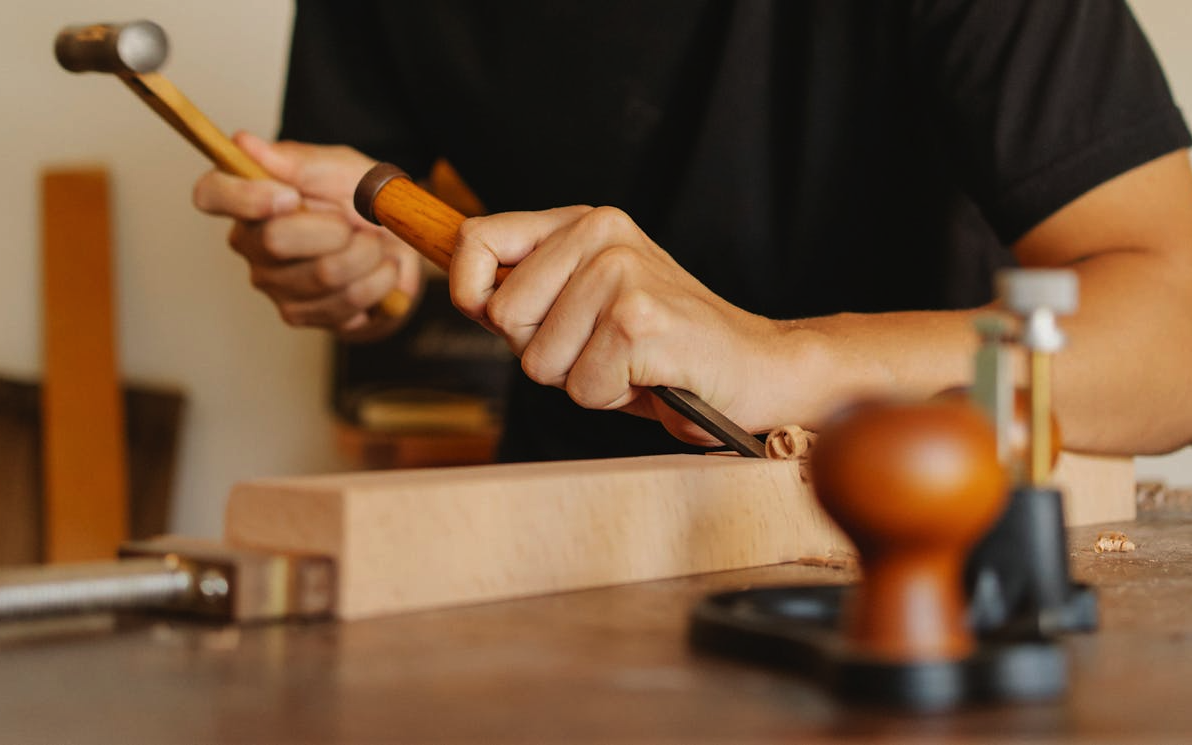
Fundamental Joinery Techniques
In woodworking, joinery is key to creating strong and lasting connections between pieces of wood. Understanding various joinery techniques helps you choose the best method for your project.
Dovetail Joints
Dovetail joints are often used in drawer construction. They provide excellent strength and resistance to being pulled apart. This method features interlocking “tails” and “pins” that hold the pieces together.
- Strength: Great for drawer and box joints.
- Aesthetics: Looks attractive, often left visible.
- Use: Requires precise cuts, often made with a dovetail saw.
When executed correctly, dovetail joints can even enhance the beauty of the final product.
Mortise and Tenon Joints
The mortise and tenon joint is a classic choice in furniture making. This joint involves inserting a “tenon” (a protruding piece) into a “mortise” (a corresponding hole).
- Durability: Creates a strong, long-lasting joint.
- Versatility: Works well for frames and tables.
- Stability: Resists twisting.
It’s important to ensure that your cuts are precise for a snug fit. Use wood glue to strengthen the bond.
Butt Joints
Butt joints are among the simplest and most common wood joints. They occur when two pieces of wood are simply butted together.
- Ease of Use: Great for beginners due to its simplicity.
- Applications: Common in cabinets and frames.
- Strength: Can be reinforced with screws or dowels.
Although they are straightforward, using wood glue can add extra strength to your butt joints.
Biscuit Joints
Biscuit joints offer a more advanced method that enhances alignment and strength in joinery. A biscuit, which is a small, oval-shaped piece of compressed wood, fits into matching slots in the two pieces.
- Alignment: Helps keep pieces aligned during assembly.
- Strength: Creates a solid bond with glue.
- Ease: Faster to make than some traditional joints.
Using a biscuit joiner can simplify the process and lead to clean and precise results.
Traditional Woodworking Tools and Their Uses
Traditional woodworking relies on a variety of tools, each serving a unique purpose. Understanding these tools can greatly enhance your skills and the quality of your projects.
Chisels and Gouges
Chisels are essential for shaping and carving wood. They come in different sizes and blade shapes for various tasks. For example, flat chisels are great for making precise cuts, while paring chisels help with fine detailing.
Gouges, on the other hand, have curved blades. They are perfect for hollowing out areas in wood, allowing you to create deeper grooves or rounded shapes. Both tools allow for intricate designs and add character to your projects.
To keep your chisels and gouges effective, always sharpen them before use. A sharp blade ensures cleaner cuts and avoids unnecessary effort.
Hand Planes
Hand planes are vital for smoothing and flattening wood surfaces. They work by shaving off thin layers from the wood, making it even and ready for finishing. A smooth surface is key for both aesthetics and fitting pieces together securely.
There are various types of hand planes. Jack planes are useful for general smoothing tasks, while block planes work well in tight spots. Understanding which plane to use for specific tasks enhances your woodworking precision.
Keep your hand planes properly maintained by ensuring the blades are sharp and the bodies are clean. This ensures optimal performance and longevity.
Saws and Marking Tools
Saws are fundamental for cutting wood in traditional woodworking. Hand saws come in various types, such as panel saws for straight cuts and dovetail saws for precise joinery. You can achieve clean, accurate cuts by selecting the right saw for each project.
Marking tools are equally important. A good marking knife helps you create precise lines where you plan to cut. Utilizing a square ensures your angles are accurate, which is essential for joints and connections.
Both saws and marking tools play critical roles in preparing your materials for assembly. Having the right tools means your cuts will be more efficient and less labor-intensive.
Decorative Woodworking Techniques
Decorative woodworking techniques focus on enhancing the aesthetic appeal of wooden pieces. These methods transform ordinary wood into stunning works of art. Three primary techniques include wood carving, intarsia, and marquetry. Each offers unique styles and challenges that allow you to express creativity.
Wood Carving
Wood carving is a technique where you cut or shape wood to create designs or figures. It can range from simple carvings to intricate sculptures. Tools like chisels and gouges help create depth and detail. You can carve everything from decorative scrolls to lifelike animals.
Carving wood requires patience and practice. It's important to choose the right type of wood, as softer woods are easier to carve. Basswood and butternut are popular choices for beginners due to their fine grain. Don't forget to sand your piece after carving to achieve a smooth finish.
Intarsia
Intarsia is a method of creating a picture or design by fitting together different pieces of wood. Each piece is shaped and then glued into place. This technique allows you to use various wood types and colors, resulting in a vibrant, textured artwork.
You’ll use a jigsaw or scroll saw to cut the pieces. Intarsia pieces often resemble pictures or patterns. This technique requires precise fitting and attention to detail. The end result can be striking, turning your work into a conversation piece.
Marquetry
Marquetry involves creating a design by applying pieces of veneer to a base, typically plywood or solid wood. You can create patterns, scenes, or geometric designs, giving your piece an elegant touch. Unlike intarsia, marquetry uses thinner wood slices.
To begin, you'll need to plan your design and cut the veneers to size. Use a strong adhesive to ensure the pieces stay in place. Once completed, finishing your piece with oil or varnish protects the wood, enhancing the colors and grain.
With these decorative techniques, you can elevate your woodworking projects and showcase your artistic skills!
Woodturning Methods
Woodturning is a fascinating method of shaping wood into various forms using a lathe. It requires specific techniques and tools to create functional and beautiful pieces of art.
Lathe Work
In woodturning, the lathe is your primary tool. It spins the wood while you work with specialized tools to shape it. This allows you to create items like bowls, spindles, and pens.
- Spindle Turning: This involves creating symmetrical pieces such as chair legs or dowels by turning wood between two points. You can use a variety of shapes and designs.
- Bowl Turning: Here, you hollow out wood to make bowls. It requires careful tool control and an understanding of grain direction. This helps you avoid splitting the wood and achieve balanced designs.
Choosing Tools for Woodturning
Selecting the right tools is essential for successful woodturning. The most important tool is a gouge, which helps you shape the wood smoothly.
Common tools you should consider include:
- Skew Chisels: Great for finishing and making smooth cuts. They help refine the surface.
- Parting Tools: Used to cut off pieces and define shapes. These tools are quite handy for detail work.
- Bowl Gouges: Specifically designed for bowl turning, helping you create curved shapes and hollow out wood effectively.
Make sure to choose quality tools, as they help achieve better results and enhance your experience in woodturning.
Selecting Wood Types for Traditional Techniques
Choosing the right type of wood is essential for traditional woodworking techniques. Different woods have unique qualities that affect how they perform in various projects. Understanding the differences between hardwoods and softwoods, along with specific species, will help you make informed choices.
Hardwoods and Their Applications
Hardwoods are popular in traditional woodworking because they are dense and durable. They often have beautiful grain patterns that add elegance to any project. Common hardwoods include oak, maple, and cherry.
- Oak is strong and resistant to wear, making it ideal for furniture and cabinetry.
- Maple is versatile and has a fine grain, perfect for intricate joinery.
- Cherry has a rich color that darkens with age, adding character to fine pieces.
These hardwoods are excellent for projects that require strength and aesthetic appeal.
Softwoods for Woodworking
Softwoods come from coniferous trees and are lighter than hardwoods. They are easier to cut and shape, making them a favorite for beginners and certain types of traditional techniques. Common softwoods include pine, cedar, and fir.
- Pine is inexpensive and readily available, making it perfect for large projects like frames.
- Cedar is naturally resistant to decay, great for outdoor furniture.
- Fir has a straight grain, making it suitable for strong construction.
Softwoods can be a great choice for more casual or experimental projects in woodworking.
Notable Species: Oak, Maple, and Cherry
These three hardwood species are essential for traditional woodworking. Their unique characteristics lend themselves to various applications.
- Oak stands out for its strength and resilience, ideal for heavy-use items.
- Maple is loved for its smooth finish, making it a top choice for fine cabinetry and detailed joinery.
- Cherry adds a sophisticated touch with its warm tones and ability to age beautifully.
Using these species not only enhances the quality of your craftsmanship but also connects you to the rich history of woodworking traditions.
Traditional Furniture Making and Applications
In traditional woodworking, creating furniture involves using specific techniques and styles. This can lead to strong, beautiful pieces that serve various purposes in your home. Let’s explore the different applications of traditional furniture making.
Tables and Chairs
Tables and chairs are essential in any home. Traditional woodworking techniques ensure that these pieces are not only functional but also striking.
- Joinery Techniques: Your tables and chairs often use strong joints like mortise and tenon. This provides stability and allows for intricate designs.
- Materials: Hardwood, such as oak and walnut, is commonly used. These woods not only offer durability but also add warmth and character to your space.
Whether you choose a simple dining table or an elaborately carved chair, each piece reflects centuries of craftsmanship.
Custom-Made Furniture
Custom-made furniture allows you to express your style. Traditional woodworking techniques give your unique designs a timeless appeal.
- Personalization Options: You can select everything from the type of wood to the finish, ensuring that the piece matches your home decor perfectly.
- Handcrafted Details: Artisans often include special elements, such as hand-carved motifs or inlays, making your furniture one-of-a-kind.
This approach may cost more, but the result is a beautiful, functional piece of art that fits your needs.
Cabinetry and Storage Solutions
In woodworking, cabinetry represents both beauty and utility. With traditional techniques, your cabinets can be crafted to fit your storage needs while enhancing your living space.
- Custom Designs: Tailoring cabinets to specific dimensions helps maximize space. You can choose from open shelving or closed cabinets for a neat look.
- Classic Styles: Consider elements like raised panel doors or decorative moldings. These details add a refined touch that elevates your interior design.
Traditional cabinetry offers functional solutions without compromising on style, making it a great addition to any home.
Conclusion
Traditional woodworking continues to thrive because it balances functionality with artistry. By mastering joinery methods, selecting suitable wood types, and using time-tested tools, woodworkers create pieces that are both durable and beautiful. Decorative techniques like carving, marquetry, and intarsia add personality, while woodturning and furniture-making showcase craftsmanship in its finest form. Whether you’re building furniture, refining a hobby, or preserving a heritage skill, embracing traditional woodworking allows you to connect with a craft that honors both creativity and precision.
Featured. Imageby Pexels.
Share this post
Leave a comment
All comments are moderated. Spammy and bot submitted comments are deleted. Please submit the comments that are helpful to others, and we'll approve your comments. A comment that includes outbound link will only be approved if the content is relevant to the topic, and has some value to our readers.
Comments (0)
No comment