
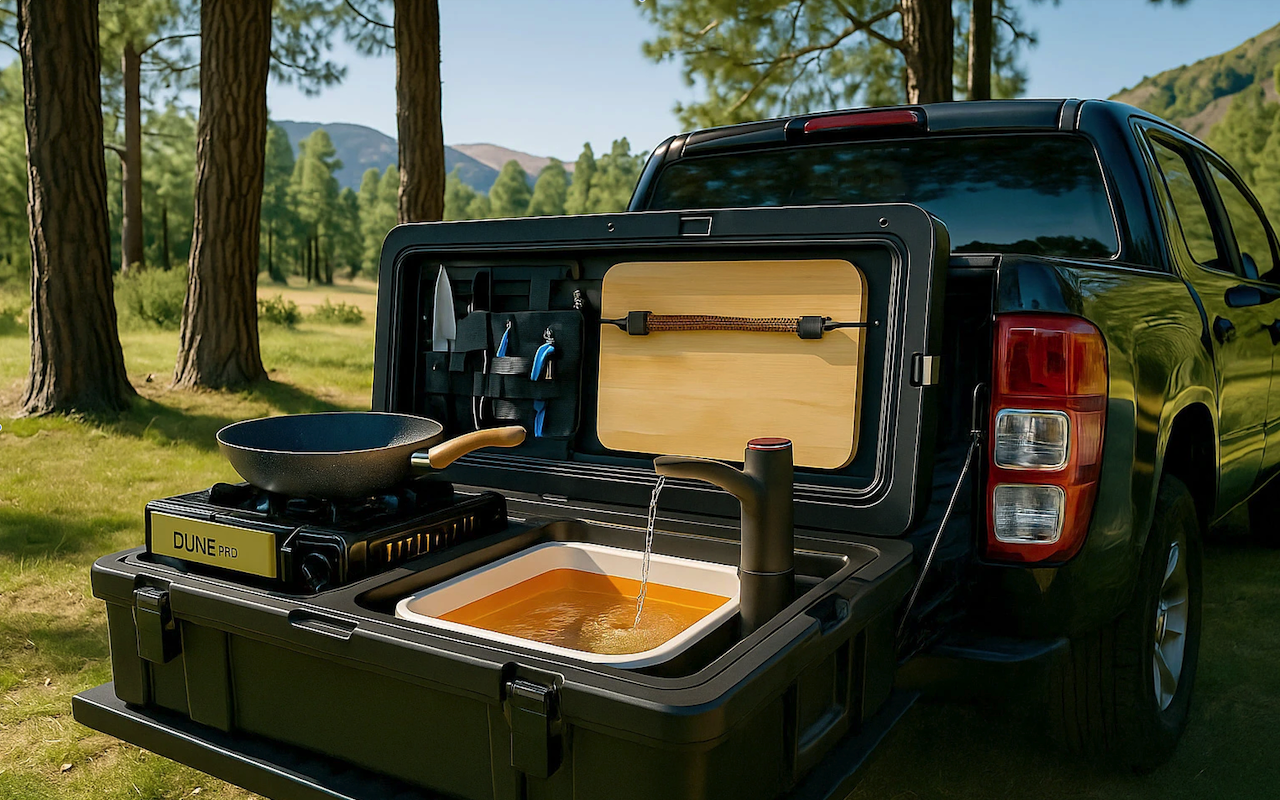
There was a time when owning a fully outfitted camp kitchen meant you were an overlander, thru-hiker, or extreme adventurer. The gear was rugged, often DIY, and designed for people who spent weeks off-grid, cooking in remote conditions with minimal resources.
But that’s no longer the case.
As outdoor travel becomes more mainstream—fueled by vanlife culture, affordable gear, and flexible work lifestyles—a growing number of casual campers are embracing the benefits of a structured, portable kitchen setup. What was once reserved for “gear heads” is now being used by families at state parks, road-tripping couples, tailgaters, and even first-time campers.
“We used to think it was overkill,” says Daniel Cho, a dad of two who camps 5–6 weekends a year. “Now, we can’t imagine camping without it. Everything’s in one place, and meals feel like they’re part of the fun instead of a chore.”
In this article, we’ll explore why portable camping kitchens are no longer a niche tool for hardcore adventurers and how it’s becoming an essential part of modern camping for almost everyone.
From Niche Gear to Mainstream Essential
The shift in who uses a portable camping kitchen reflects a broader change in outdoor culture. Camping isn’t just for survivalists anymore; it’s for families looking to unplug for the weekend, remote workers traveling cross-country, and road-trippers hopping from national parks to beach parking lots. These newer adventurers aren’t necessarily looking to rough it. They want comfort, speed, and simplicity.
Modern portable kitchen setups meet many of the needs of today’s campers. They are compact enough to fit in a small vehicle, organized to keep cooking gear in one place, and simple enough that even beginners can start using them with ease.
What once required extensive gear knowledge and detailed pre-trip planning is now available in streamlined, self-contained designs that are straightforward and ready to use.
What Casual Campers Want And How Portable Kitchens Respond
- Fast setup with minimal unpacking: Essentials are kept together and ready to use
- Fewer forgotten tools or utensils: Dedicated spaces reduce the chance of leaving items behind
- Simpler food prep: Built-in surfaces and storage help keep cooking organized
- Easier cleanup: Integrated wash basins or compact cleaning tools reduce effort
- Efficient packing: Fewer separate bags or bins are needed
- Family-friendly organization: Structured setups can make meals safer and less stressful
The appeal isn’t just for full-time travelers anymore; it’s for the everyday outdoor enthusiast who values function and clarity over chaos.
“We were weekend warriors with a messy system,” says Marta Lewis, who camps with her partner a few times a year. “We finally bought a Camp Kitchen, and it instantly made camping feel more relaxing, like we finally knew where everything was.”
Conclusion: A New Standard for All Campers
The portable campking kitchen has officially graduated from “advanced gear” to everyday essential. No longer the domain of backcountry experts or vanlife veterans, it’s now being adopted by anyone who wants to eat well and stay organized in the outdoors, whether at a forest campground, beach parking lot, or festival site.
As more casual campers discover how much time, energy, and frustration a portable campking kitchen can save, it’s clear this trend is here to stay. In fact, for many, it’s no longer a luxury at all; it’s the first thing they pack.
Share this post
Leave a comment
All comments are moderated. Spammy and bot submitted comments are deleted. Please submit the comments that are helpful to others, and we'll approve your comments. A comment that includes outbound link will only be approved if the content is relevant to the topic, and has some value to our readers.
Comments (0)
No comment