
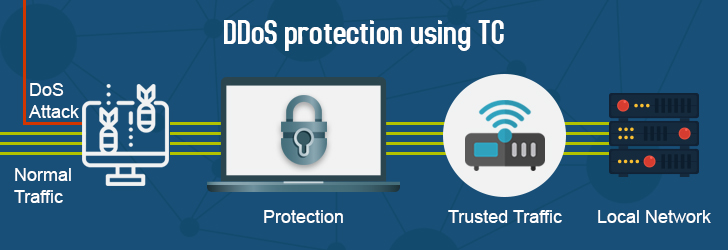
The two methods described below are extracted from the lartc howto. It is included here to provide a complete reference. For latest updates, please view source document.
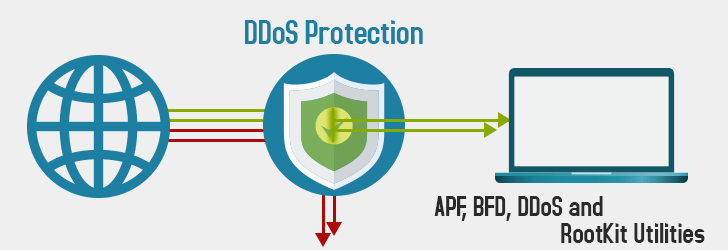
Being a web host, your servers are constantly being attacked by hackers by denial-of-service (DoS) and other brute force attacks. There is no foolproof method to stop 100% of all attacks, but there are ways to protect your servers by applying firewall rules, and detecting and banning attacking IPs.
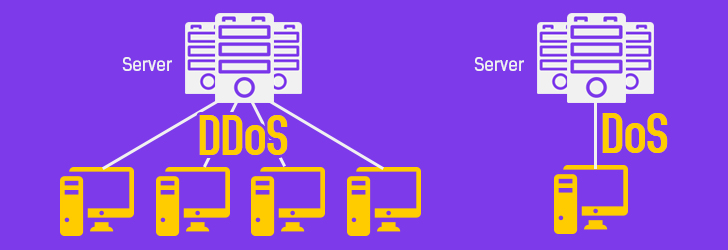
DoS attack, denial-of-service attack, is an explicit attempt to make a computer resource unavailable by either injecting a computer virus or flooding the network with useless traffic. In simple words, it is similar to thousands of people trying to enter a room from a single entrance, ultimately causing havoc. This not only disturbs the normal operations of the network but also results in poor performance and system breakdown due to overwhelming requests. A large-scale DDoS attack (ranges up to 400 GBps) can affect the internet connectivity of an entire geographical region. There are two types of DoS attacks: computer attack and network attack. Common forms of denial of services attacks are: